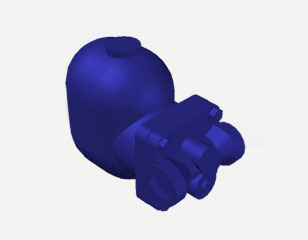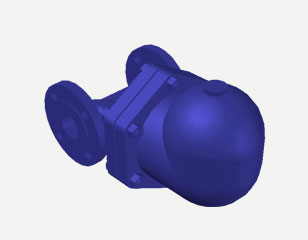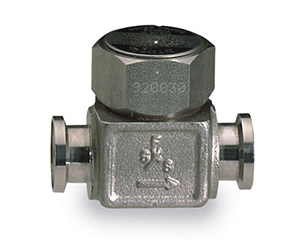
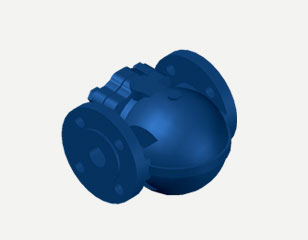
The FT14 flanged ball float steam trap is the most widely used mechanical trap in steam service. A float follows the condensate level in the chamber and opens a discharge valve in proportion to the load, so condensate leaves at steam temperature and the equipment stays full of dry steam.
Flanged connections make it the standard choice for steam mains, heat exchangers, jacketed vessels and packaged plant where the pipe class calls for a flanged joint rather than a screwed one. It covers sizes DN15 to DN50 with a maximum differential pressure of 4.5, 10 or 14 bar depending on the orifice fitted.
Design and construction
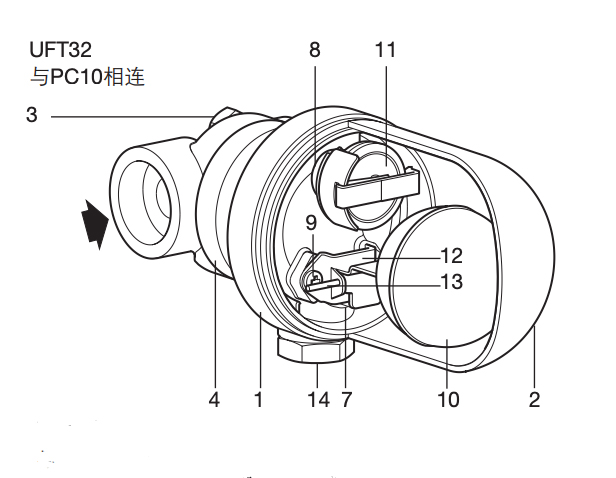
SG iron body with a bolted cover, stainless steel float and lever, and a hardened stainless steel valve plug seating on a renewable seat. Three orifice sizes cover the usual range of duties, and the internals are common across sizes so one spare kit serves several traps.
Key features
- Continuous, load-proportional condensate discharge
- Flanged EN 1092 PN16 or ASME Class 150 connections
- Three orifice options: 4.5, 10 and 14 bar maximum differential
- SG iron body with bolted cover for inspection and cleaning
- Stainless steel internals resist erosion and corrosion
- Handles back pressure from lifted and pressurized condensate mains
- Optional air vent for fast start-up on flooded equipment
Selection and sizing
Size on the condensate load at the minimum differential pressure the plant will actually see, and then check the trap can pass that load at start-up when the load can be two to three times the running figure. For a heat exchanger at 10 bar g with 500 kg/h of condensate and 2 m of lift to the return main, a DN25 FT14 with the 14 bar orifice is a typical selection. Confirm the flange standard, face-to-face and any insulation requirement before ordering.
Installation and maintenance
Mount the trap at or below the drain point with a straight inlet run, a strainer upstream and a sight glass downstream. Fit an air vent at the high point of the equipment – air binding, not trap failure, is the usual reason a float trap stops discharging. Check the discharge pipework is sized for flash steam, and insulate the trap to avoid radiant losses.
Options and spare parts
Float and lever assembly, valve plug, seat, cover gasket and cover bolts are available for every size. Supply the trap model, size and orifice marking when ordering spares.