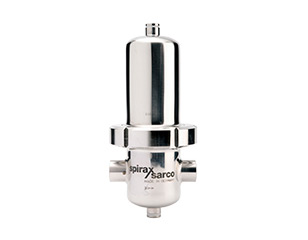
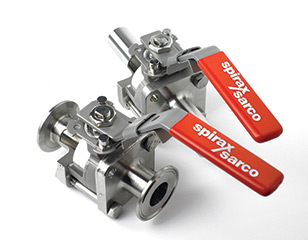
These clean steam valves are the isolation and control valves for hygienic steam systems: sterilizers, SIP supply lines, clean steam distribution and humidification in classified areas. They are built to be drainable, cleanable and free of crevices where bacteria could grow.
On a clean steam system the valve is part of the sterility argument. A standard industrial valve with a threaded bonnet and a packed gland introduces both a contamination risk and a leak path, so the valves on these systems are specified with hygienic bodies and diaphragm or bellows seals.
Design and construction
Stainless steel body with a diaphragm or bellows seal, minimal internal volume, full drainability and connections to sanitary standards. Surfaces are machined and finished for cleaning, and the design avoids dead legs where condensate could collect.
Key features
- Hygienic stainless steel construction
- Diaphragm or bellows seal – no packed gland
- Drainable, crevice-free internal design
- Sanitary clamp or flanged connections
- Suitable for SIP and sterilization cycles
- Surface finish and material documentation for validation
Selection and sizing
Confirm the line size, the pressure and temperature of the sterilization cycle, the connection standard (clamp, DIN, or flanged) and the surface finish required. Specify whether the valve is for isolation or modulation, and whether position feedback is needed for the validation record.
Installation and maintenance
Install so that the body drains fully under gravity, avoid dead legs, and orient the actuator so that condensate cannot collect around the stem seal. Include the valves in the cleaning and sterilization validation regime.
Options and spare parts
Diaphragms, seals, seats and actuators are available; certificates accompany each spare part.